









Wearable tech could help keep highway workers safe

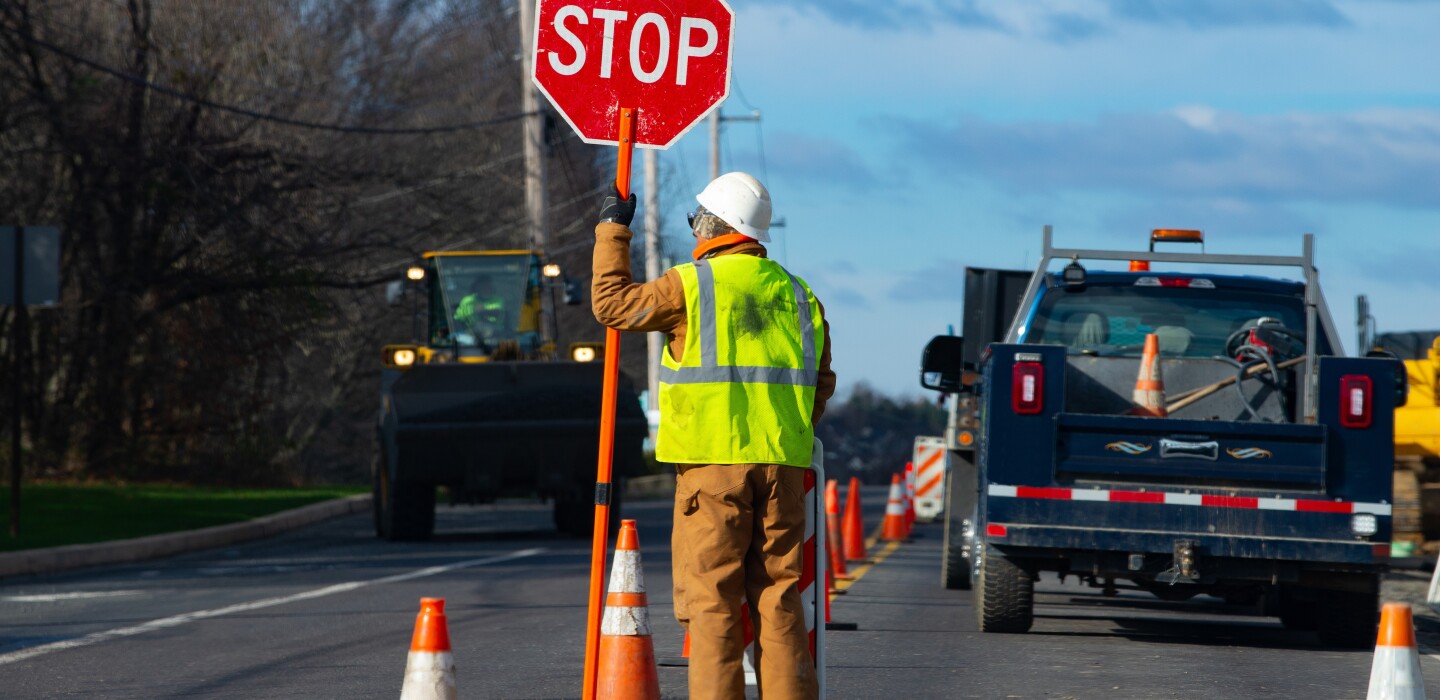
Road crews on highways and roads in Maryland are testing new technology to alert people to oncoming cars and other hazards.
The project is testing technology developed by a partnership between Morgan State University, the City of Baltimore and the Maryland Department of Transportation. Safety and Mobility Advancement Regional Transportation and Economics Research (SMARTER) Center at Morgan State for a work zone warning system for workers in highway construction projects.
The system uses light detection and ranging (lidar) sensors, edge computing and “predictive time-to-collision” algorithms to deliver alerts to employees, who receive warnings in three ways: through a flashing beacon, a haptic buzz issued from a wearable device, and through a siren, says Joseph Niehaus, editor and communications manager. National Transport Center (NTC) said. There is a Smarter Center in NTC.
“The rationale is that a multi-sensor warning system can create redundancies that ensure that all workers in the work area are informed of the potential hazard, no matter what activity they are performing,” Niehaus said in an email. “Most available safety systems do not have this type of dynamic response to the environment; they focus primarily on encouraging drivers to slow down and creating barriers between workers and the automobile.”
The pilot study involved five highway construction workers on a road project near the Morgan State campus in a 35 mph speed zone. The project began around April 10 and will run through early May.
According to the project’s findings, during a recent six-day testing period, more than 50,800 vehicles passed through the area – including 288 vehicles traveling 45 mph or faster, 83 autos traveling 55 mph or faster, and 16 vehicles traveling 65 mph or faster. Workers reported feeling rumbling and hearing sirens from the wearable device. However, according to the researchers, the flashing warning lights were not as effective in direct sunlight.
This project was funded Maryland Office of Highway Safety (MHSO) through a federal grant from the National Highway Traffic Safety Administration. As a next step, the Smarter Center has partnered with the Baltimore City Department of Transportation and MHSO, as well as private sector engineering and technology firms, to further test the system in real-world settings.
this week’s issue National Work Area Awareness WeekA time that is used by public safety leaders and others to bring awareness to the continuing issue of workplace safety. The theme of this year’s national campaign from April 20-24 is “Safe Work Saves Lives.”
In Maryland, nine highway workers lost their lives last year, down from 12 in each of the last three years, according to the state. figures. However, last year 449 workers were injured.
In 2023, following a strike and the death of six workers at a work zone on Interstate 695 in Baltimore County, Governor Wes Moore called for a meeting. Work Area Safety Working Group People with transportation expertise, including law enforcement officers, labor leaders, traffic engineers, highway safety experts and workers with direct experience in the work areas.
In 2024, Moore signed the Maryland Road Worker Protection Act, which established new levels of fines for speed enforcement in work zones, signs that clearly designate the beginning and end of work zones, and flashing lights when workers are present.
Other states also marked this week with notices and messages about being cautious in work areas.
Last year in neighboring Virginia, there were nearly 4,000 work zone accidents, resulting in 2,300 injuries, and 17 deaths. according to The Virginia Department of Transportation projects an increase of more than 3,700 crashes, more than 1,500 injuries and 15 deaths in work zones by 2024.
“With more than 600 projects planned this construction season and more than 7,000 miles of pavement to be repaved or replaced, it is critical that drivers safely share the limited space in work zones,” Virginia Transportation Secretary Nick Donohue said in a statement.
On the West Coast, Oregon recorded a five-year high for work zone accidents in 2024, with 621 accidents recorded. according to Data from Oregon Department of Transportation (ODOT).
The state uses technology devices such as automated flaggers, which are operated by a crew member from “a safe location,” said Matt Noble, ODOT public affairs specialist.
“We typically use them on two-lane roads when we have to close a lane,” he said via email. “It’s safer that way.”
Oregon also uses intelligent transportation system technology such as portable message signs and dynamic late merge systems in its work areas – which encourage merging at the best times.