










How the West reinvents Indian crafts as luxury fashion – The Week

Indian craft is older than most luxury brands, and yet, between artisan hands and international runways, the origin story goes missing.
Western luxury brands have repeatedly taken “inspiration” from centuries-old Indian crafts and everyday Indian life, rebranded them under a foreign label with an exorbitant price tag, and walked away with a profit.
No credit is given to the artisans, communities and cultures who created these traditions.
Here are five times it happened:
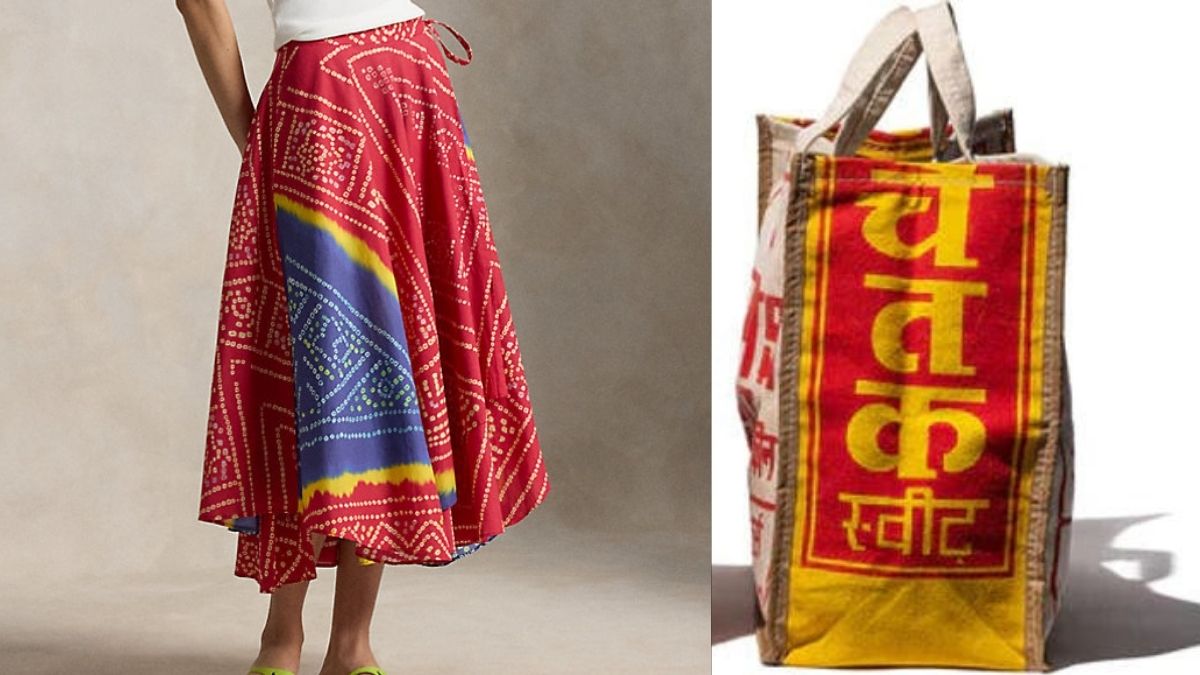
Ralph Lauren’s Bandhani Skirt
Ralph Lauren’s Summer 2026 collection features a printed cotton wrap skirt, priced at ₹44,800, which is described as “inspired by traditional Bandhani tie-dye techniques” on the brand’s website.
Bandhani is not just a pattern – it is one of the oldest textile arts of India, with roots dating back to the Indus Valley Civilization. Artisans in Gujarat and Rajasthan make it by individually tying thousands of small knots on the cloth before dyeing it, a labor-intensive process that can take several days.
This craft holds deep cultural significance, being worn during weddings and festivals throughout the region. Ralph Lauren’s catalog makes no mention of India, the states it comes from, or the communities that have kept it alive.
The Jumkha that became ‘ Vintage Earrings’ in Paris
Just weeks before the Bandhani skirt went viral, a Ralph Lauren model was spotted on the Paris Fashion Week runway wearing earrings that were instantly recognized as jhumkas — traditional bell-shaped dangling earrings that have been worn in India, Pakistan, and Bangladesh for centuries.
Jhumkas are not a trend; They are seen in ancient temple sculptures, worn at every major festival, and passed down through generations of families.
Ralph Lauren’s show notes describe them only as “old earrings”. No mention of South Asia. No mention of India.
Prada Kolhapuri slippers
At Milan Fashion Week in June 2025, Prada debuted sandals in its Spring-Summer 2026 menswear collection that were almost identical to the Kolhapuri chappal – a handmade leather sandal that has been made by Dalit artisan communities in Kolhapur, Maharashtra since the 12th or 13th century. This craft has received the Geographical Indication tag granted in 2019.
It can take up to two weeks to make a pair by hand, using locally sourced buffalo hide and traditional vegetable dyes. Prada initially listed the sandals as “leather flat sandals”, with no reference to their origin. He faced criticism after the Internet immediately recognized him. The brand eventually admitted that they were inspired by traditional Indian footwear – but only after public pressure.
Dior’s $200,000 Mukache embroidered coat
At Dior’s Fall 2025 couture show in Paris, new creative director Jonathan Anderson introduced a coat that quickly became one of the season’s most talked-about pieces.
It was covered with Mukash embroidery – a centuries-old metal thread craft from Lucknow that developed during the Mughal period, in which artisans hand-twist fine wires of gold or silver through delicate fabrics to create a luster.
It took twelve artisans 34 days to make that coat. None of this was mentioned in Dior’s show notes, press materials and listings – no name, no city, no country, no craft. The coat was celebrated around the world. There were no people to make it.
Nordstrom’s $48 ‘Indian Souvenir Bag’
American luxury retailer Nordstrom transformed a plain Indian jhola – a simple cotton cloth bag usually used for groceries – into a $48 “Indian souvenir bag”. This works out to a little over ₹4,400 per bag!
Nordstrom described it as “a must-have for any traveler or lover of Indian culture”, with printed Hindi text, along with the names of local snack brands such as “Ramesh Special Namkeen” and “Chetak Sweets” – as exotic, attractive design details to American audiences. In India, these bags are available for only ₹50-100, or sometimes even given free on large purchases at local stores.
Five examples. Five different objects – a skirt, a pair of earrings, a slipper, a couture coat, a grocery bag. All taken from India, all resold without credit, all profitable for people who had nothing to do with making them.
For centuries, the logic has been the same: take it from India, rename it, and sell it back to the world as something new and fresh. The crafts are still here. The artisans are still working. Traditions are still alive today. Every time this acknowledgment is missing that India was first.